Table of Contents
TogglePM Modi at BRICS Summit: Warns Against Weaponisation of Critical Minerals, Meets Philippines President
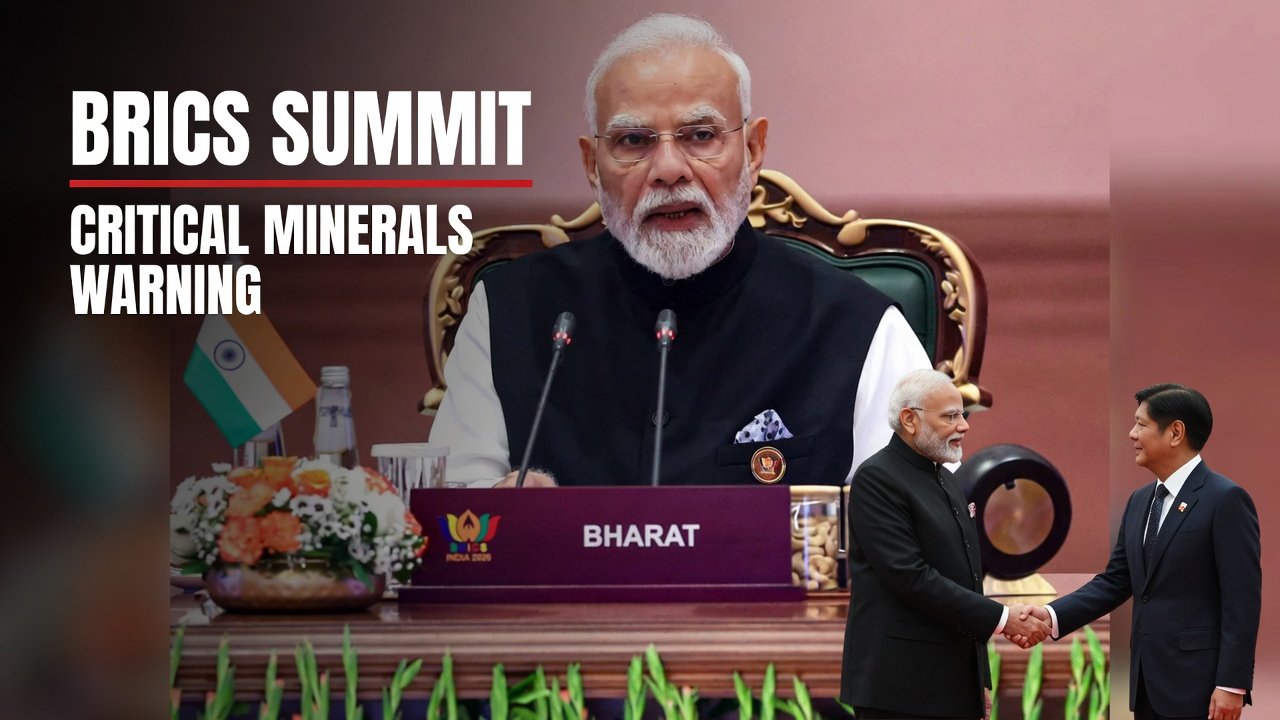
Prime Minister Narendra Modi used the BRICS Summit in New Delhi to highlight growing concerns over geopolitical tensions, supply-chain disruptions and the strategic use of technology and critical minerals. During the summit, Modi warned that the “weaponisation” of critical minerals and technology could hinder global progress and called for greater cooperation, resilience and reliable access to essential resources.
The remarks came as BRICS leaders gathered in New Delhi for the 18th BRICS Summit, where discussions focused on global economic stability, trade, technology, energy, climate challenges and the concerns facing developing countries.
PM Modi Warns Against Weaponisation of Critical Minerals
A major focus of Modi’s address was the growing importance of critical minerals to modern economies. These resources are essential for industries such as semiconductors, electric vehicles, renewable energy, advanced electronics and other strategic technologies.
Modi cautioned BRICS members against turning technology and critical minerals into instruments of geopolitical pressure. He argued that such practices could undermine the development gains achieved by countries and create additional vulnerabilities in global supply chains.
The Prime Minister’s message was closely connected to the broader BRICS agenda of building more resilient and diversified supply chains. Ensuring stable access to strategic resources has become increasingly important as countries seek to reduce dependence on concentrated sources of supply.
Why Critical Minerals Matter
Critical minerals have become an important part of the global economic and strategic landscape.
Minerals such as lithium, cobalt, nickel and rare earth elements are used across a wide range of modern industries. They are particularly important for clean-energy technologies, batteries, electric vehicles, electronics and advanced manufacturing.
Any major disruption to their supply can therefore affect manufacturing costs, technology development and national economic security.
For emerging economies, reliable access is particularly significant because supply-chain disruptions can delay industrial projects and increase dependence on external suppliers.
Modi’s comments at the BRICS Summit therefore placed resource security alongside technology cooperation and economic development as issues requiring greater international coordination.
Supply-Chain Resilience Becomes a BRICS Priority
The critical-minerals warning was part of a broader discussion about global supply chains.
Modi said geopolitical tensions, disruptions and other global crises increasingly have effects that extend beyond national or regional borders. The BRICS platform, he argued, should help member countries develop solutions that strengthen resilience and support inclusive growth.
The summit’s discussions also covered areas including food security, energy, artificial intelligence, climate action and cross-border payment systems.
The New Delhi Declaration adopted at the summit called for greater cooperation across these areas while emphasizing the interests of developing economies and the Global South.
Modi Calls for Accessible Technology
Technology was another important element of the Prime Minister’s message.
Modi stressed that technological development should be inclusive and that emerging economies should have access to solutions that can support development. Rather than allowing advanced technologies to become instruments of economic pressure, BRICS countries should work toward cooperation and wider access.
This approach is particularly relevant as artificial intelligence, digital infrastructure, advanced manufacturing and clean-energy technologies become increasingly important to economic competitiveness.
The Prime Minister also highlighted the potential of cooperation in areas such as artificial intelligence, digital agriculture and clean energy.
PM Modi Meets Philippines President Ferdinand Marcos Jr
Alongside his BRICS engagements, Prime Minister Narendra Modi held a bilateral meeting with Philippine President Ferdinand Marcos Jr on the sidelines of the summit.
The meeting focused on strengthening the India-Philippines relationship across several strategic areas, including defence, space, trade and technology. The two countries have been working to expand their relationship beyond traditional economic engagement and deepen cooperation in areas relevant to the Indo-Pacific.
The bilateral engagement comes after India and the Philippines elevated their relationship to a strategic partnership, providing a broader framework for cooperation.
Defence and maritime security are particularly significant because both countries have interests in maintaining a stable and secure Indo-Pacific region.
India-Philippines Ties Gain Strategic Importance
India and the Philippines have increasingly expanded cooperation in defence and security, while also exploring opportunities in technology, space and trade.
The latest meeting between Modi and Marcos Jr indicates that both sides are looking to broaden this relationship further.
Greater cooperation in space and technology could open opportunities for knowledge sharing, capacity building and commercial partnerships, while stronger trade ties could support broader economic engagement.
The meeting also fits into India’s wider effort to strengthen relationships with countries across the Indo-Pacific.
BRICS Summit Highlights India’s Diplomatic Role
The New Delhi summit provided India with an important platform to discuss global economic and geopolitical issues with a broad group of emerging economies.
Modi’s engagements extended beyond formal BRICS sessions, with several bilateral meetings taking place with foreign leaders during the summit. His discussions covered areas ranging from trade and defence to technology, critical minerals and international cooperation.
The summit also highlighted the challenge of maintaining consensus among countries with different geopolitical interests.
Despite those differences, BRICS leaders adopted a joint declaration covering issues including global conflicts, economic cooperation, trade, energy, food security and reforms to international institutions.
What Modi’s Critical Minerals Warning Means
The Prime Minister’s warning reflects a broader global debate over who controls the resources and technologies required for the next phase of industrial development.
As countries invest heavily in electric mobility, renewable energy, semiconductors, artificial intelligence and advanced manufacturing, access to critical minerals is becoming an increasingly important economic issue.
For India, diversification of supply chains and stronger partnerships with resource-rich and technology-producing countries could help reduce vulnerabilities.
The BRICS framework could potentially provide another platform for cooperation on these issues, particularly among emerging economies seeking greater influence in global economic decision-making.
A Broader Message on Global Cooperation
Modi’s comments at the summit went beyond critical minerals. His broader message was that global challenges require collective solutions.
From supply-chain disruptions to climate change and technology access, issues that once appeared primarily national are increasingly interconnected.
The Prime Minister called for BRICS cooperation to produce practical outcomes that benefit ordinary citizens rather than remaining limited to government-level discussions. The summit also promoted cooperation in areas such as health, technology, agriculture and sustainable development.
With BRICS continuing to expand its membership and influence, discussions around critical resources, technology and global governance are likely to remain central to the group’s future agenda.
Frequently Asked Questions
What did PM Modi say at the BRICS Summit about critical minerals?
PM Modi warned against the weaponisation of critical minerals and technology, saying such practices could hinder global development and undermine shared progress.
Why are critical minerals important?
Critical minerals are essential for industries including electric vehicles, batteries, renewable energy, electronics, semiconductors and advanced technologies. Reliable access is therefore increasingly important for economic and technological development.
Who did PM Modi meet from the Philippines?
Prime Minister Narendra Modi held a bilateral meeting with Philippine President Ferdinand Marcos Jr on the sidelines of the BRICS Summit in New Delhi.
What areas did India and the Philippines discuss?
The two leaders discussed strengthening cooperation across areas including defence, space, trade and technology.
Where was the 2026 BRICS Summit held?
The 18th BRICS Summit was held in New Delhi, India, from September 12 to 13, 2026.
Why is the BRICS discussion on critical minerals significant?
Critical minerals are becoming strategically important as countries expand clean-energy, electric-vehicle, semiconductor and advanced-technology industries. Cooperation on reliable and diversified supplies can help reduce supply-chain vulnerabilities.