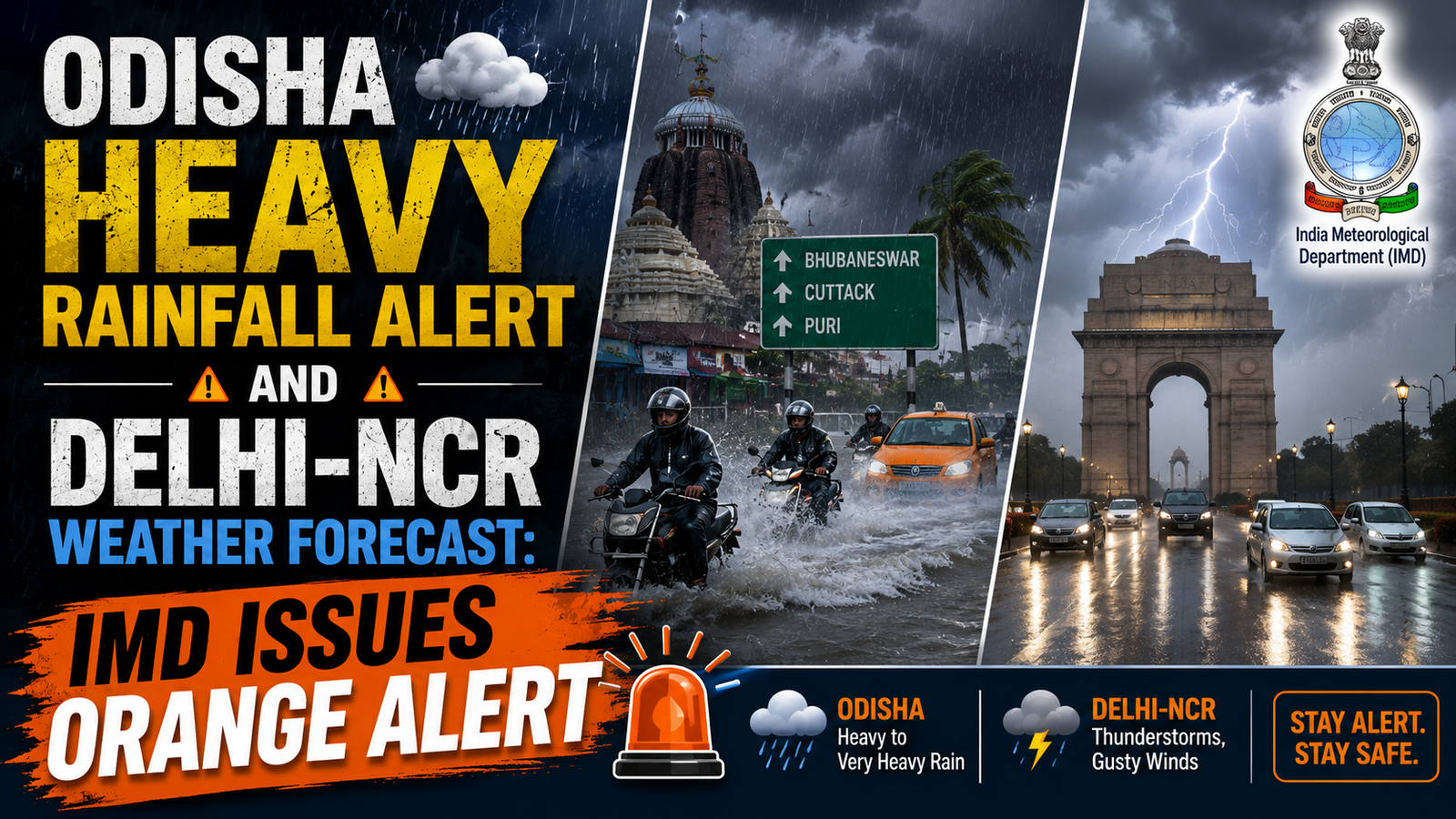
Odisha Heavy Rainfall Alert: IMD Issues Orange Alert as Delhi-NCR Braces for Hot Weather
Odisha heavy rainfall is expected to remain a major weather concern as the India Meteorological Department (IMD) has issued an Orange Alert for isolated areas of the state. The warning comes as a new low-pressure area is developing over the Bay of Bengal, which could influence weather conditions across Odisha.
At the same time, people in Delhi-NCR, including Noida, Gurugram and Ghaziabad, are expected to experience a very different weather pattern, with hot, partly cloudy and hazy conditions forecast for the day.
Odisha Heavy Rainfall Alert Issued
The IMD has issued an Orange Alert for parts of Odisha, warning of heavy to very heavy rainfall at isolated locations.
The developing low-pressure area over the Bay of Bengal is expected to influence rainfall activity in the region. Such weather systems can bring periods of intense rain, particularly in areas located along their path.
Residents in areas covered by the alert are advised to remain updated with the latest local weather warnings and avoid unnecessary travel through waterlogged or vulnerable areas.
New Low-Pressure Area Over Bay of Bengal
The formation of a low-pressure area over the Bay of Bengal is an important factor behind the latest Odisha heavy rainfall warning.
Low-pressure systems can draw moisture from surrounding areas and contribute to increased rainfall activity. Depending on their movement and development, they can result in widespread rain, thunderstorms and periods of intense precipitation.
For Odisha, the system is expected to keep weather authorities alert as they monitor its movement.
What Does an Orange Alert Mean?
An Orange Alert indicates that authorities are expecting potentially significant weather conditions that require people to remain prepared.
In the case of heavy rainfall, intense showers can result in temporary waterlogging, reduced visibility, difficult road conditions and disruption to normal activities.
People living in affected areas should follow official advisories and take extra care while travelling during periods of heavy rain.
Possible Impact of Heavy Rain in Odisha
Heavy rainfall can affect several parts of daily life.
Road traffic may slow down, low-lying areas can experience water accumulation and localised flooding may occur if rainfall becomes intense over a short period.
Farmers and people working outdoors may also need to adjust their plans depending on local conditions.
The exact impact will vary from district to district, which is why residents should pay attention to location-specific IMD warnings.
Delhi-NCR Weather Forecast
While Odisha prepares for heavy rain, Delhi-NCR is expected to experience hot and partly cloudy conditions.
Delhi, Noida, Gurugram and Ghaziabad are likely to see maximum temperatures in the range of around 36°C to 37°C.
The presence of haze could also affect visibility and make the weather feel uncomfortable during the warmer parts of the day.
Hot and Hazy Conditions in Delhi
The Delhi-NCR weather pattern is expected to remain considerably different from the conditions in Odisha.
Partly cloudy skies may provide some temporary relief from direct sunlight, but temperatures around 36°C-37°C will still make the afternoon feel hot.
Hazy conditions can also reduce visibility, particularly during certain parts of the day.
People travelling across Delhi-NCR should therefore remain mindful of weather and visibility conditions.
Noida, Gurugram and Ghaziabad Weather
The wider NCR region, including Noida, Gurugram and Ghaziabad, is expected to experience broadly similar conditions.
Temperatures could remain around the mid-to-high 30s, accompanied by partly cloudy skies and haze.
For commuters, the combination of heat and humidity can make outdoor travel uncomfortable, particularly during the afternoon.
Staying hydrated and avoiding prolonged exposure to direct heat can help people manage the weather better.
Two Very Different Weather Patterns
The latest forecast highlights the contrasting weather conditions across different parts of India.
Odisha is dealing with the possibility of intense rainfall linked to the developing low-pressure system, while Delhi-NCR is expected to remain hot and hazy.
Such regional differences are common during India’s changing weather patterns, particularly when systems develop over the Bay of Bengal and influence rainfall across eastern and central parts of the country.
What Residents Should Keep in Mind
People in Odisha should closely monitor official weather updates, particularly if their district falls under the Orange Alert.
During heavy rainfall, residents should avoid crossing flooded roads, stay away from areas prone to waterlogging and follow instructions issued by local authorities.
In Delhi-NCR, residents should prepare for hot conditions and stay hydrated, especially when spending extended periods outdoors.
Weather Updates Remain Important
Weather systems can change quickly, particularly when a low-pressure area is developing over the sea.
The movement and intensity of the system will determine where the heaviest rainfall occurs.
For this reason, residents should not rely solely on general forecasts or social media posts. Official IMD updates and local administration advisories remain the most reliable sources for warnings.
Odisha Heavy Rainfall and Delhi Weather: Key Takeaway
The Odisha heavy rainfall alert is the key weather development as the IMD monitors a new low-pressure area over the Bay of Bengal.
An Orange Alert has been issued for heavy to very heavy rainfall at isolated places in Odisha, making it important for residents to stay alert and follow official advisories.
Meanwhile, Delhi-NCR is expected to remain hot, partly cloudy and hazy, with maximum temperatures around 36°C-37°C.
The contrasting forecasts show how weather conditions can vary significantly across India at the same time.
Frequently Asked Questions (FAQs)
1. Why has an Orange Alert been issued for Odisha?
The IMD has issued an Orange Alert because isolated areas of Odisha may receive heavy to very heavy rainfall associated with a developing low-pressure area over the Bay of Bengal.
2. What is causing the heavy rainfall in Odisha?
A new low-pressure area forming over the Bay of Bengal is expected to influence rainfall activity over Odisha.
3. What does an Orange Alert mean?
An Orange Alert indicates potentially significant weather conditions for which residents should remain prepared and follow official advisories.
4. What weather is expected in Delhi-NCR?
Delhi-NCR is expected to experience hot, partly cloudy and hazy conditions, with maximum temperatures around 36°C-37°C.
5. What will the temperature be in Delhi today?
The maximum temperature in Delhi is expected to remain around 36°C-37°C.
6. Will Noida and Gurugram also experience hot weather?
Yes. Noida and Gurugram are expected to experience broadly similar hot and partly cloudy conditions, with temperatures around the mid-to-high 30s.
7. What should people do during heavy rainfall in Odisha?
Residents should monitor official weather updates, avoid flooded roads and low-lying areas, and follow instructions issued by local authorities.
8. Can the low-pressure area change the rainfall forecast?
Yes. The movement and development of a low-pressure system can influence the intensity and distribution of rainfall, so residents should continue checking updated forecasts.
9. Is Delhi-NCR expected to receive heavy rain today?
The forecast provided indicates hot, partly cloudy and hazy conditions for Delhi-NCR rather than the heavy-rainfall conditions expected in Odisha.
10. Where should people check official weather updates?
Residents should rely on updates and warnings issued by the India Meteorological Department (IMD) and local authorities for the latest information.