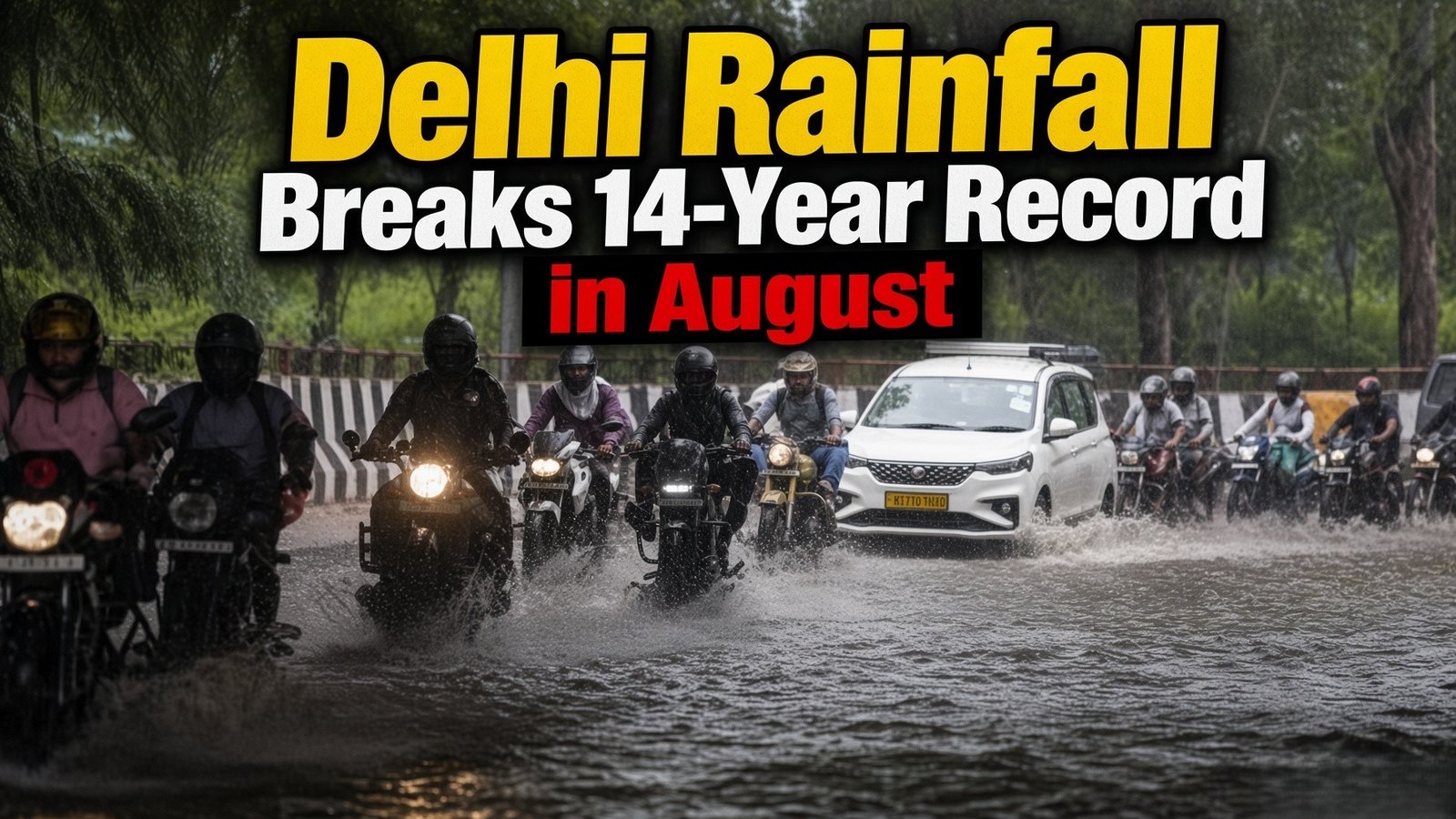
Delhi has recorded its wettest first week of August in 14 years, with the capital receiving around 127 mm of rainfall in just seven days. The rainfall recorded between August 1 and August 7 is the highest for the opening week of August since 2011, highlighting the intensity of the current monsoon spell.
The unusually heavy Delhi rainfall comes as the India Meteorological Department has issued warnings for heavy to very heavy rainfall in parts of the country, including East Rajasthan and Odisha.
For Delhi residents, the persistent rain has renewed concerns over waterlogging, traffic disruptions and the city’s ability to handle intense rainfall within short periods.
Delhi Receives 127 mm Rain in First Week
Delhi recorded 127 mm of rain during the first seven days of August, according to reports. This makes the first week of August the wettest such period in the capital since 2011.
The figure is significant because rainfall concentrated over a few days tends to put much greater pressure on urban infrastructure than the same amount distributed across an entire month.
Roads, drains, underpasses and other low-lying areas are particularly vulnerable when intense showers arrive within a short window.
Why This Delhi Rainfall Is Significant
Delhi regularly receives substantial rainfall during the southwest monsoon. However, the timing and intensity of rainfall matter just as much as the total amount.
A sudden burst of heavy rain can overwhelm drainage systems before water has enough time to flow away.
That can lead to:
- Waterlogging on major roads
- Traffic congestion
- Delays in public transport
- Disruption to office and school commutes
- Water accumulation in low-lying areas
- Fallen trees and localised infrastructure damage
The impact is often greatest when heavy showers coincide with peak commuting hours.
IMD Issues Heavy Rain Alerts
The weather situation extends beyond the national capital.
The India Meteorological Department has forecast heavy to very heavy rainfall over East Rajasthan and Odisha, according to the latest weather updates.
Such warnings are significant because intense rainfall can increase the risk of flash flooding, waterlogging and other weather-related hazards, particularly in vulnerable districts.
Residents in areas under alert are advised to monitor official weather updates and follow instructions issued by local authorities.
What Does Heavy and Very Heavy Rainfall Mean?
The IMD categorises rainfall according to the amount received over a 24-hour period.
Heavy rainfall refers to rainfall between 64.5 mm and 115.5 mm in 24 hours.
Very heavy rainfall means rainfall between 115.6 mm and 204.4 mm in 24 hours.
These classifications help weather agencies and disaster-management authorities communicate the potential severity of a rainfall event.
Delhi Weather and the Risk of Urban Waterlogging
Delhi’s expanding urban landscape has made water management increasingly challenging.
Large areas of the city are covered by roads, buildings and other paved surfaces. These surfaces limit the amount of rainwater that can naturally seep into the ground.
When rainfall becomes intense, drainage infrastructure can struggle to remove water quickly enough.
This is why even a few hours of heavy rain can create major waterlogging in certain parts of the city.
Why Underpasses Are Particularly Dangerous
Underpasses and other low-lying stretches can become hazardous during intense rainfall.
Water can accumulate quickly in these locations, sometimes faster than motorists expect. Vehicles attempting to cross flooded roads can become stranded, creating additional traffic and safety problems.
Residents should avoid entering visibly flooded underpasses and instead take alternate routes whenever authorities issue warnings.
Heavy Rainfall Is a Mixed Blessing
Monsoon rainfall is essential for India’s water resources and agriculture.
For Delhi, rain also helps reduce extreme summer temperatures and contributes to groundwater recharge.
But excessive rainfall creates its own risks.
When large quantities of water fall over a short period, the immediate problems can include flooding, transport disruption and damage to infrastructure.
The challenge for urban authorities is therefore not simply to manage rainfall shortages, but also to ensure the city can handle intense rainfall when it occurs.
IMD Alerts Help Authorities Prepare
Weather warnings are particularly important during periods of intense monsoon activity.
An early warning gives local authorities time to prepare emergency teams, inspect vulnerable infrastructure and issue public advisories.
It can also help residents make practical decisions about travel.
For example, commuters can postpone non-essential journeys, while schools, offices and businesses can monitor local conditions before making operational decisions.
What Delhi Residents Should Do During Heavy Rain
People travelling during periods of intense rainfall should take basic precautions.
- Check the latest IMD weather updates before leaving home.
- Avoid known waterlogging and flood-prone routes.
- Do not attempt to cross heavily flooded underpasses.
- Allow extra time for travel.
- Keep emergency contacts and a charged phone available.
- Follow advisories issued by local authorities.
Drivers should be particularly careful because standing water can hide potholes, open drains and other road hazards.
Rainfall Pattern Highlights Urban Resilience Challenge
The latest rainfall figures also raise a broader question about Delhi’s urban preparedness.
As extreme weather events become more disruptive, cities need drainage networks and emergency systems capable of handling intense rainfall rather than only average monsoon conditions.
This requires regular maintenance of drains, better water-flow planning, protection of natural drainage channels and faster response mechanisms.
Technology can also help. Better rainfall forecasting, real-time water-level monitoring and location-specific alerts can give authorities and residents more time to respond.
What Happens Next?
The immediate focus will remain on weather forecasts and the possibility of further heavy rainfall.
The IMD’s alerts for East Rajasthan and Odisha indicate that active monsoon conditions are continuing across parts of India.
For Delhi, residents should continue monitoring local forecasts rather than assuming that a temporary reduction in rainfall means the weather system has completely weakened.
Final Thoughts
The latest Delhi rainfall figures underline the intensity of the monsoon in the capital. With 127 mm recorded during the first seven days of August, Delhi has experienced its wettest opening week of August since 2011.
The development comes alongside heavy rainfall warnings for East Rajasthan and Odisha, showing that several parts of India are experiencing active monsoon conditions.
For Delhi, the key concern now is not simply how much rain falls, but whether the city’s drainage, transport and emergency systems can keep pace with increasingly intense rainfall events.
FAQ
How much rain did Delhi receive in the first week of August 2026?
Delhi received around 127 mm of rainfall between August 1 and August 7, making it the wettest first week of August since 2011.
Why is Delhi’s August rainfall significant?
The 127 mm total represents the highest rainfall recorded during the first seven days of August in Delhi since 2011.
Which areas are under heavy rainfall alerts?
The IMD has forecast heavy to very heavy rainfall over East Rajasthan and Odisha.
What is classified as very heavy rainfall by the IMD?
The IMD classifies rainfall between 115.6 mm and 204.4 mm in 24 hours as very heavy rainfall.
Why does heavy rain cause waterlogging in Delhi?
Dense construction, paved surfaces and limited drainage capacity can prevent rainwater from being absorbed or discharged quickly during intense rainfall.