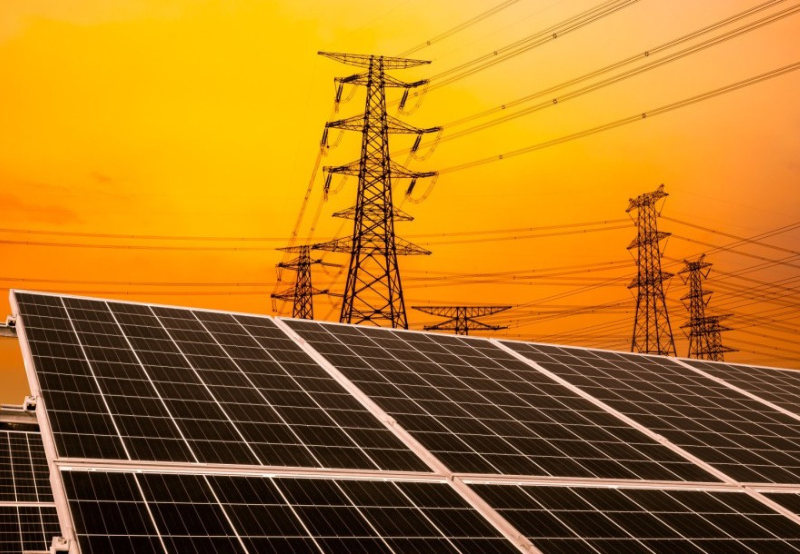
In recent years, the installation of RE capacity has greatly exceeded that of fossil-based power, mostly coal-fired. In April-January 2024-25, just 1.4 gigawatts (GW) of thermal power were added. In contrast, 29.5 GW more was produced in the RE sector in 2024–2025.
Industry participants believe that despite the tremendous expansion and current efforts to create green energy corridors, quicker implementation and interagency cooperation are still essential for a more efficient use of RE.
“The current transmission network, especially at the intra-state level, lag behind the pace of installed generation capacity, especially in renewable-rich states,” says Kishor Nair, CEO of Avaada Energy. Faster transmission corridor construction, prompt grid integration, and careful planning by federal and state organizations are necessary to prevent renewable energy from becoming stranded because of inadequate evacuation infrastructure.
Many distribution businesses (discoms) are taking their time signing PPAs, either because of the “complexity” of the tender process or in the hopes of a pricing drop, according to Naveen Khandelwal, CEO of BrightNight India.
“India would have signed more than 25-30 GW of PPAs in the last 12 to 18 months and bid for roughly 100 GW were called in the last two years. However, only 35-40 GW capacity (of PPAs) have got signed,” Khandelwal says.
Discoms are taking time to determine whether the profiles of different generations fit into their overall plan. Otherwise, they might be seeking tariff exemptions.
Even though the government has been working to address these problems, obstacles still exist. Under the Energy Conservation Act, the Ministry of Power announced year-by-year Renewable Purchase Obligations (RPOs) in October 2023 that would last until 2030. This was an innovative step to provide legal support for the commercial viability of RE units. For distributed RE, hydro, wind, and solar, different RPO goals were established.
Furthermore, the Connectivity and General Network Access to the Inter-State Transmission (IST) System Regulations, published by the Central Electricity Regulatory Commission in 2022, grant producing businesses non-discriminatory open access to IST via general network access (GNA). “A lot of GNA awards were given out after these regulations were introduced, but there is a discrepancy between (PPA) winners and GNA awardees,” Khandelwal claims. Industry observers anticipate that the imminence of actual evacuation commissioning will cause a delay in the commissioning of projects on the ground. Since not all GNA grantees are also PPA winners, there is a great deal of overlap. In fact, a few of the PPA winners are awaiting evacuation.