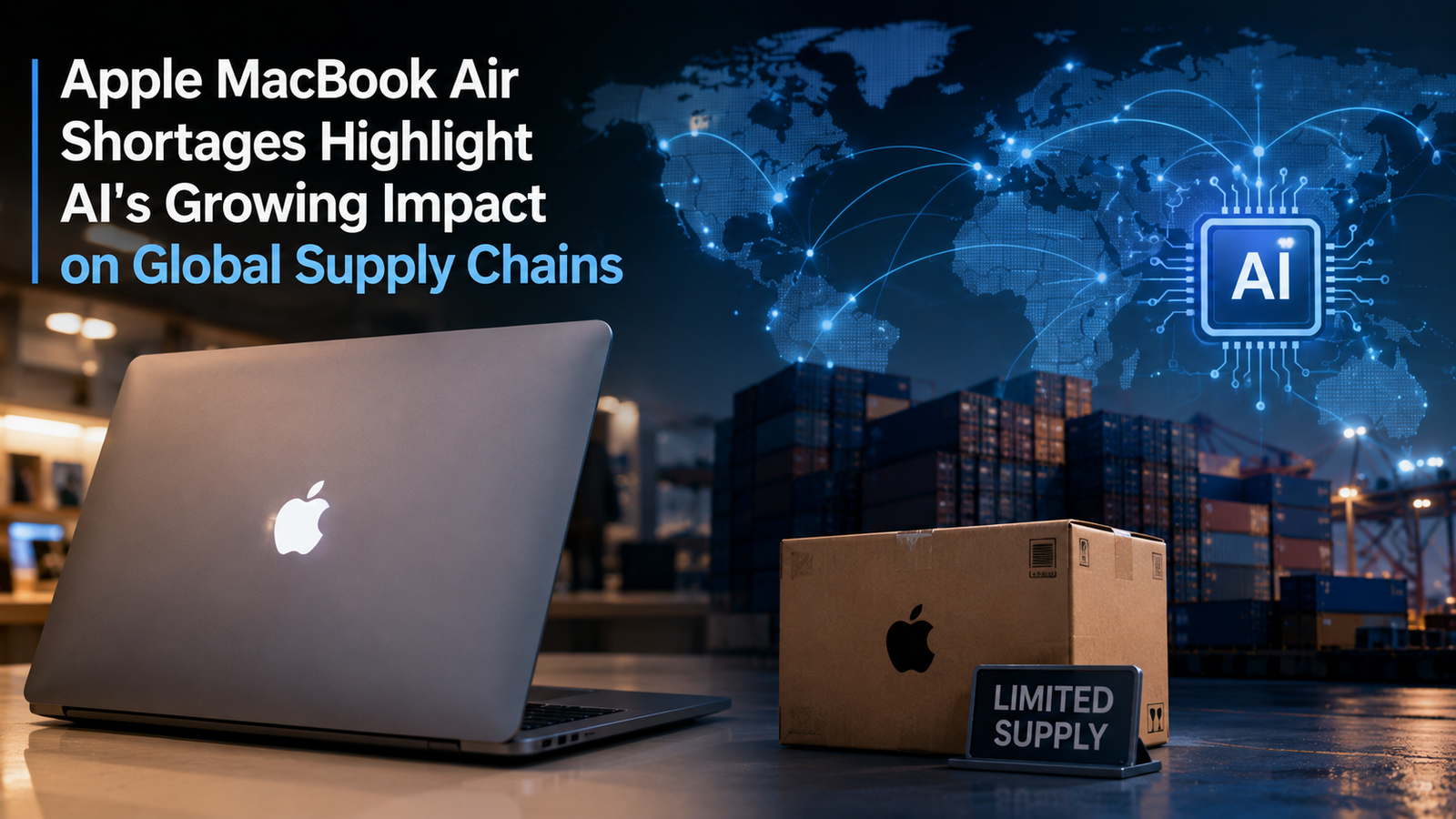
Apple is reportedly facing MacBook Air shortages in several markets as supply chain constraints affect the availability of key memory components. While supply disruptions are not new to the technology industry, the latest shortage reflects a major shift in the semiconductor market. A significant share of advanced memory production is now being directed toward AI data centers, leaving consumer electronics manufacturers under increasing pressure.
The development illustrates how the rapid expansion of artificial intelligence is influencing industries far beyond cloud computing, with laptop buyers now feeling the impact.
Why Are MacBook Air Models Facing Shortages?
According to reports, Apple is experiencing difficulty maintaining adequate inventory of certain MacBook Air models due to tight supplies of memory components.
The semiconductor industry has been reallocating manufacturing capacity to meet unprecedented demand from companies building AI infrastructure. As a result, components that were once readily available for consumer devices have become more difficult to source.
This has created production bottlenecks across parts of the electronics industry.
AI Is Reshaping the Memory Chip Market
The rapid growth of generative AI has dramatically increased demand for advanced memory technologies.
Modern AI servers require enormous amounts of high-performance memory to train and run large language models.
The most sought-after components include:
- High-Bandwidth Memory (HBM)
- High-performance DRAM
- Enterprise SSD storage
- AI server memory modules
Memory manufacturers are prioritizing these high-value products because AI infrastructure has become one of the fastest-growing segments of the semiconductor industry.
How AI Data Centers Affect Consumer Electronics
Every AI data center contains thousands of powerful GPUs that rely on advanced memory to process massive workloads.
As cloud providers and AI companies invest billions of dollars in expanding data center capacity, memory suppliers are increasingly allocating production to enterprise customers.
This shift can affect consumer electronics in several ways:
- Reduced availability of memory components
- Longer production timelines
- Delayed laptop shipments
- Tighter inventories
- Higher manufacturing costs
While premium enterprise hardware receives priority, consumer products may face supply constraints until production capacity expands.
Why Memory Has Become a Strategic Resource
Traditionally, processors attracted most of the attention in computing.
Today, memory has become equally important.
Advanced AI models require extremely fast access to enormous datasets, making high-performance memory a critical part of modern computing infrastructure.
As a result, manufacturers are investing heavily in expanding memory production, but building new fabrication facilities takes years and requires significant capital investment.
What This Means for Apple
Apple operates one of the world’s most sophisticated supply chains, but even large manufacturers are not immune to industry-wide component shortages.
If memory constraints continue, Apple may experience:
- Limited availability of certain MacBook Air configurations
- Longer delivery times
- Inventory fluctuations across regions
- Increased pressure on production planning
The company will likely continue working closely with suppliers to secure long-term component availability.
Could Other Laptop Brands Be Affected?
Apple is unlikely to be the only company facing these challenges.
Manufacturers across the PC industry rely on many of the same semiconductor suppliers.
If memory shortages persist, other laptop brands could also experience:
- Production delays
- Component shortages
- Supply chain disruptions
- Longer customer wait times
The extent of the impact will depend on supplier capacity and future investments in semiconductor manufacturing.
The Bigger Picture: AI’s Hidden Cost
Artificial intelligence is driving one of the largest infrastructure investments in technology history.
While consumers often focus on new AI software features, the demand for AI hardware is creating ripple effects throughout the semiconductor supply chain.
The competition for advanced memory, GPUs, and storage is influencing product availability across multiple industries, from cloud computing to personal electronics.
Final Thoughts
The reported Apple MacBook Air shortage demonstrates how the AI revolution is reshaping global technology supply chains. As memory manufacturers prioritize components for AI data centers, consumer electronics companies may face increasing challenges in maintaining inventory.
Although the current constraints are tied to rising AI demand, continued investment in semiconductor manufacturing is expected to improve supply over the longer term. Until then, buyers may encounter longer wait times for certain laptop models as the industry adapts to a rapidly changing hardware landscape.
FAQ
Why is Apple facing MacBook Air shortages?
Reports suggest that supply chain constraints and shortages of key memory components are limiting the availability of certain MacBook Air models.
How is AI affecting laptop production?
The rapid expansion of AI data centers has significantly increased demand for advanced memory components, reducing availability for consumer electronics manufacturers.
What is High-Bandwidth Memory (HBM)?
HBM is a high-performance memory technology designed to deliver faster data transfer speeds for AI processors, GPUs, and high-performance computing systems.
Will other laptop brands also face shortages?
Potentially. If memory component shortages continue, other PC manufacturers relying on the same suppliers could experience similar supply constraints.
Will MacBook Air prices increase?
Supply shortages can influence pricing and availability, but any future pricing decisions will depend on market conditions, production capacity, and Apple’s business strategy.