Table of Contents
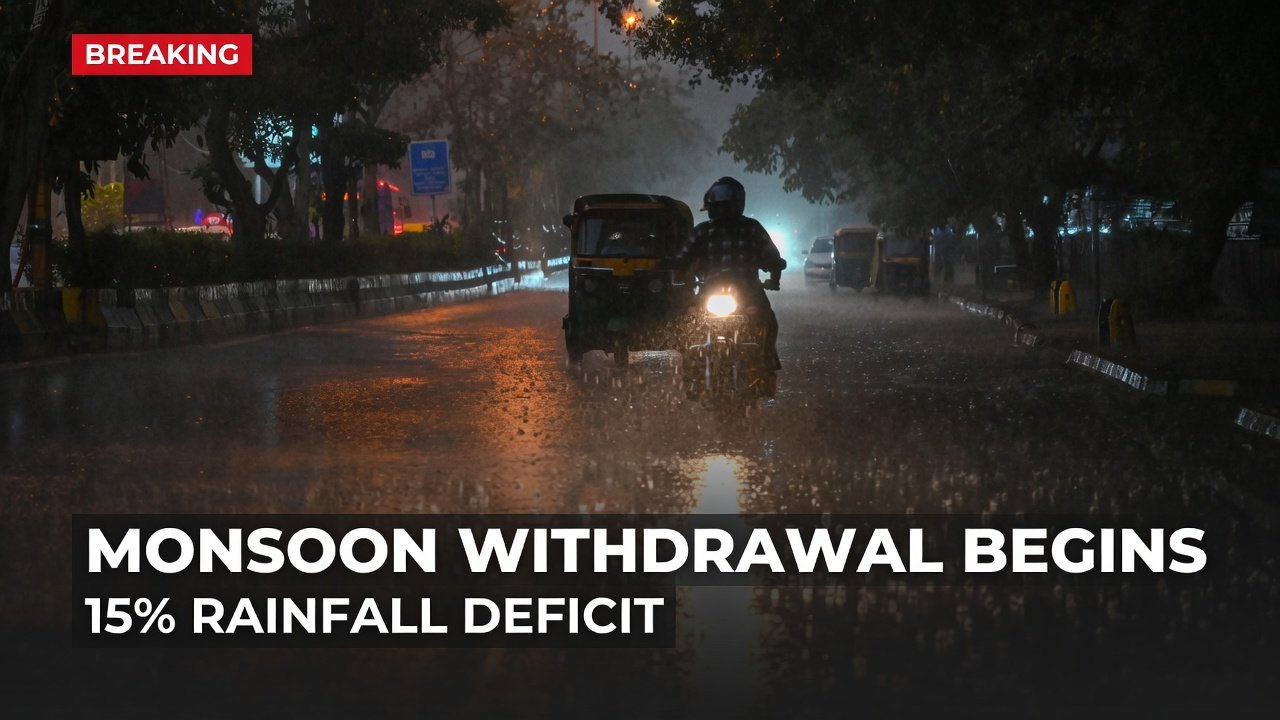
ToggleSouthwest Monsoon Begins Withdrawal as India Faces 15% Rainfall Deficit
The Southwest Monsoon withdrawal has begun from parts of northwest India, marking the start of the seasonal retreat even as the country continues to face a significant rainfall shortfall. The India Meteorological Department (IMD) said conditions became favourable for the monsoon to withdraw from parts of West Rajasthan around September 19, 2026.
The withdrawal comes with India’s cumulative monsoon rainfall running about 15% below the long-period average, with several major agricultural states facing deficits that may be difficult to recover before the season ends.
IMD Begins Monsoon Withdrawal From Northwest India
The normal date for the beginning of Southwest Monsoon withdrawal from northwest India is around September 17. This year’s withdrawal is therefore slightly later, beginning around September 19.
According to the IMD, the first stage of withdrawal is determined by factors including a sustained reduction in rainfall, the establishment of an anticyclone in the lower atmosphere and a significant reduction in atmospheric moisture.
The beginning of withdrawal does not mean rainfall will immediately stop across India. Several regions are still expected to receive showers in the coming days.
India’s Monsoon Deficit Remains at 15%
The country’s cumulative rainfall deficit stood at approximately 15% as of September 13, according to data cited by the IMD and weather reports. The deficit has remained elevated despite periods of heavy rainfall during July and August.
The season began with a particularly sharp shortfall. June recorded a deficit of more than 35%, while July brought some recovery with rainfall close to or slightly above normal. August again saw below-normal rainfall, leaving the overall season significantly deficient.
The uneven distribution of rainfall is also important. While some parts of the country have received adequate or excess rainfall, several agricultural regions continue to experience substantial shortages.
South Peninsula Among the Worst-Affected Regions
The South Peninsula has recorded one of the largest regional deficits, at around 28%, while East and Northeast India have recorded a deficit of about 25%. Central India has a smaller deficit of around 6%, while Northwest India stands at approximately 10%.
Several states have particularly large shortfalls. Reported deficits include:
- Meghalaya: 59%
- Andhra Pradesh: 43%
- Arunachal Pradesh: 42%
- Punjab: 40%
- Bihar: 35%
- Karnataka: 29%
- Kerala: 27%
- Tamil Nadu: 26%
- Rajasthan: 25%
- Haryana: 23%
- Telangana: 20%
These figures highlight the uneven nature of the 2026 monsoon, with both northern and southern agricultural regions experiencing significant rainfall gaps.
Agricultural Impact Remains a Key Concern
Rainfall during the Southwest Monsoon is critical for India’s agricultural economy because the June-September season supports the cultivation of major kharif crops, including rice, pulses, oilseeds and cotton.
The rainfall deficit has already affected expectations for some crops. Reuters reported that India’s 2026 rice production is expected to fall by around 10 million metric tonnes, with rainfall shortages in important rice-growing regions contributing to weaker yield prospects.
Lower rainfall can also affect reservoir levels, groundwater availability and irrigation requirements, particularly in areas that depend heavily on monsoon precipitation.
At the same time, the impact is not uniform across the country. Strong rainfall in other regions and existing foodgrain stocks can provide some cushion against localized production losses.
Rainfall Could Continue Even After Withdrawal Begins
The start of Southwest Monsoon withdrawal does not signal an immediate end to rainfall across India.
The IMD has forecast additional rainfall activity across several states. Parts of southern India, eastern India and central India are expected to see showers in the days around the withdrawal period. Tamil Nadu and parts of Andhra Pradesh and Telangana, in particular, could continue to receive rainfall into the latter part of September.
This means some regions could still receive useful late-season rainfall, although weather officials and analysts have indicated that several of the existing state-level deficits may be difficult to erase completely.
El Niño Adds to Monsoon Concerns
The 2026 monsoon has also been influenced by the strengthening El Niño climate pattern. Earlier reports indicated that El Niño was contributing to expectations of below-normal seasonal rainfall.
Reuters reported in August that India was on course for its weakest monsoon in nearly two decades, with rainfall projected to finish around 15% below the long-term average.
The final seasonal outcome, however, will depend on rainfall during the remaining part of September and the pace at which the monsoon retreats across the country.
What the Monsoon Withdrawal Means for India
The withdrawal marks the transition from India’s primary rainy season toward the post-monsoon period. As the monsoon retreats, weather patterns gradually become drier over northwest and northern India, while parts of southern and southeastern India can continue to experience rainfall associated with changing wind patterns and other weather systems.
The IMD notes that the complete withdrawal of the Southwest Monsoon from the country is a longer process and is not declared simply because the first withdrawal begins in northwest India.
For farmers, policymakers and commodity markets, attention will now remain on late-season rainfall, crop conditions, reservoir levels and the potential impact on food production.
Food Prices and Rural Economy in Focus
A deficient monsoon can create concerns about food supply and rural incomes, particularly if rainfall shortages translate into lower crop yields.
However, the effect on inflation is not automatic. India’s Chief Economic Adviser V. Anantha Nageswaran recently said that food inflation, which was around 6% in August 2026, was not expected to persist through the end of the year and described the broader food situation as manageable.
Government foodgrain stocks also provide a buffer against some production-related disruptions. Reuters reported that India’s rice stocks stood at about 59.6 million tonnes as of September 1, well above the government’s target.
Looking Ahead
The Southwest Monsoon withdrawal beginning around September 19 is an important seasonal transition, but India’s weather story is far from over. Rainfall is expected to continue in several regions even as the monsoon retreats from northwest India.
The bigger concern remains the uneven distribution of rainfall. With the national deficit at around 15% and substantial shortages reported across parts of southern, northern, eastern and northeastern India, the remaining rainfall will be closely watched for its impact on crops, reservoirs and rural economic activity.
FAQs
1. When did the Southwest Monsoon withdrawal begin in 2026?
The IMD said conditions became favourable for the Southwest Monsoon to begin withdrawing from parts of West Rajasthan around September 19, 2026.
2. What is India’s monsoon rainfall deficit in 2026?
India’s cumulative monsoon rainfall deficit was around 15% as of mid-September 2026.
3. Which region has the largest rainfall deficit?
The South Peninsula has recorded a deficit of around 28%, while East and Northeast India have recorded around 25%.
4. Which states have significant rainfall shortages?
States including Meghalaya, Andhra Pradesh, Arunachal Pradesh, Punjab, Bihar, Karnataka, Kerala, Tamil Nadu, Rajasthan, Haryana and Telangana have reported substantial deficits.
5. Does monsoon withdrawal mean rainfall will stop immediately?
No. Withdrawal begins gradually, and several parts of India can continue receiving rainfall after the process starts.
6. What is the normal date for monsoon withdrawal?
The Southwest Monsoon normally begins withdrawing from northwest India around September 17, although the exact timing varies from year to year.
7. How does a weak monsoon affect agriculture?
Lower or poorly distributed rainfall can affect crop yields, irrigation requirements, groundwater levels and reservoir storage, particularly in rain-dependent farming regions.
8. Is El Niño affecting India’s 2026 monsoon?
Strengthening El Niño conditions have been identified as one factor contributing to concerns about below-normal monsoon rainfall in 2026.
9. Will the 15% rainfall deficit affect food prices?
A rainfall deficit can create supply concerns for certain crops, but the impact on food prices depends on crop production, government stocks, regional rainfall and other market factors.
10. When will the entire Southwest Monsoon withdraw from India?
The withdrawal from the entire country occurs later than the initial retreat from northwest India. The IMD considers the broader circulation and dry-weather pattern before declaring complete withdrawal.