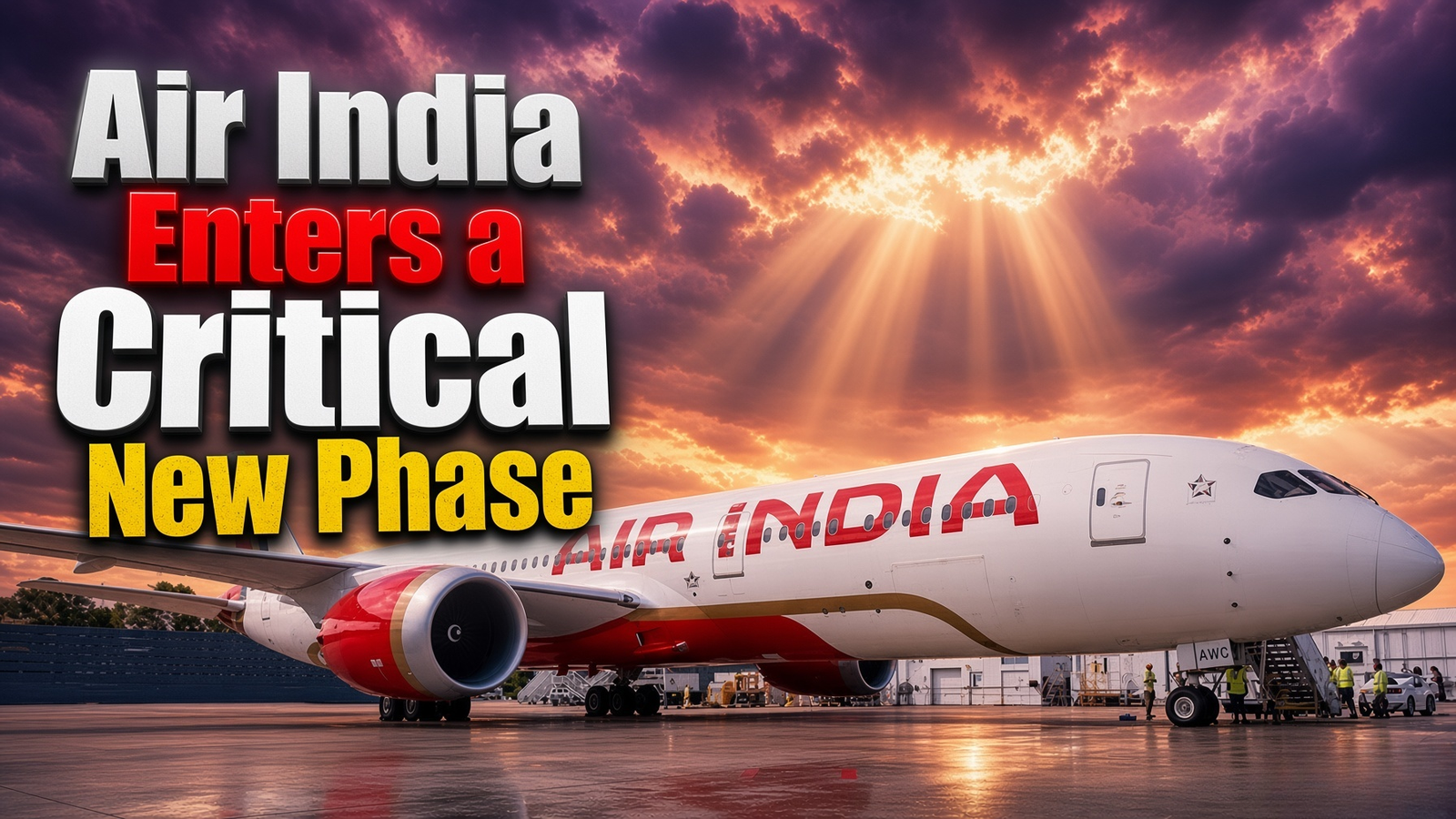
Air India is entering another crucial phase as its new CEO Tewolde Gebremariam takes charge at a time when the airline is facing several operational and financial challenges.
The carrier is dealing with financial pressure, flight disruptions and increasing regulatory scrutiny over safety and operational standards.
At the same time, Air India is preparing for an important expansion.
From September 1, 2026, the airline plans to restore most of its domestic operations and introduce new international services, signalling an attempt to strengthen its position in the highly competitive aviation market.
The timing creates a difficult balancing act for the new leadership: Air India needs to grow, but it must first demonstrate that it can operate reliably and safely at scale.
Who Is Air India’s New CEO?
Tewolde Gebremariam has taken charge as Air India’s new chief executive at a particularly challenging moment for the airline.
The CEO’s immediate priorities are expected to include operational stability, financial performance, customer experience and regulatory compliance.
Running a major airline requires coordination across aircraft, pilots, cabin crew, airports, maintenance teams and international regulators.
Any disruption in one part of the system can quickly affect the entire network.
For Air India’s new leadership, restoring consistency will therefore be one of the biggest priorities.
Financial Pressure Remains a Major Challenge
Air India’s financial position remains one of the most important issues facing the management.
The airline operates in an industry where costs are extremely sensitive to fuel prices, aircraft utilisation, foreign exchange movements, airport charges and maintenance expenses.
At the same time, Air India is investing heavily in fleet expansion and network development.
The challenge for the new CEO will be to ensure that this investment eventually translates into sustainable revenue growth.
Increasing the number of flights can generate more revenue, but it also increases operating costs.
The airline therefore needs to focus on profitable growth rather than growth at any cost.
Operational Delays Need Immediate Attention
Flight delays and operational disruptions can quickly damage an airline’s reputation.
Passengers expect airlines to provide predictable schedules, reliable connections and timely communication when disruptions occur.
For Air India, improving operational reliability will be particularly important as it expands its network.
If the airline adds more flights without strengthening its operational infrastructure, disruptions could become more difficult to manage.
The new management will therefore need to improve coordination between airport operations, aircraft maintenance, crew scheduling and customer-service teams.
Safety Scrutiny Adds Another Layer of Pressure
Safety is perhaps the most sensitive challenge facing any airline.
Air India is facing increased regulatory attention, making compliance a critical priority for its new leadership.
Regulators examine multiple aspects of airline operations, including aircraft maintenance, crew procedures, operational systems and safety management.
For Air India, maintaining strong safety standards while expanding its network will be essential.
The airline cannot afford to treat safety as simply a regulatory requirement. It must become a core part of its operational culture.
Domestic Flights Set for Normalisation
One of the positive developments is Air India’s plan to normalise most domestic flights from September 1, 2026.
Restoring regular domestic operations could help the airline rebuild passenger confidence and improve network connectivity.
Domestic routes are particularly important because they feed passengers into Air India’s international network.
A strong domestic network can therefore support the airline’s long-haul ambitions.
New International Services Could Strengthen the Comeback
Air India is also preparing to introduce new international services from September.
International routes are strategically important because they can generate higher revenues and strengthen India’s connectivity with major global markets.
The airline’s long-term transformation depends heavily on building a competitive international network.
New routes could help Air India attract business travellers, international tourists and connecting passengers.
However, international expansion also requires reliable aircraft availability, strong crew planning, regulatory approvals and dependable airport operations.
Air India’s Biggest Opportunity: Network Strength
One of Air India’s biggest advantages is its established brand and network.
The airline has historically played an important role in connecting India with international destinations.
With India’s aviation market continuing to expand, there is significant long-term demand for both domestic and international air travel.
The opportunity for the new management is to turn that demand into a more reliable and financially sustainable airline.
Competition Will Make the Job Harder
Air India isn’t operating in an empty market.
Indian aviation has become increasingly competitive, with airlines fighting aggressively for domestic passengers and international routes.
Price-sensitive Indian consumers have many choices when booking flights.
This means Air India needs to compete on more than network size.
Factors such as punctuality, service quality, aircraft experience, loyalty programmes and pricing will influence customer decisions.
Fleet Expansion Adds Both Opportunity and Risk
A larger fleet can allow Air India to expand routes and increase capacity.
But aircraft also represent substantial fixed costs.
Every aircraft needs to be maintained, staffed and utilised efficiently.
If aircraft remain grounded or flights operate with low passenger loads, profitability can suffer.
The new CEO will therefore need to ensure that fleet expansion is matched by strong demand forecasting and operational execution.
What Air India’s New CEO Must Focus On
The immediate priorities for the new leadership can be divided into five areas:
1. Operational Reliability
Reducing delays, cancellations and disruptions should be a top priority.
2. Safety
The airline needs to maintain strict safety standards while expanding its operations.
3. Financial Discipline
Expansion must eventually translate into sustainable profitability.
4. Customer Experience
Reliable schedules, better communication and consistent service can help rebuild passenger trust.
5. Network Growth
New domestic and international routes need to be selected based on long-term commercial potential.
September 1 Could Be an Important Test
The September 1 expansion will be an important test for Air India’s operational capabilities.
If the airline can successfully restore most domestic services while launching additional international routes, it could provide an important confidence boost.
But any major disruption during the expansion could reinforce concerns around operational reliability.
The first few months of the new CEO’s tenure could therefore be closely watched by passengers, investors and regulators.
Can Air India Complete Its Comeback?
Air India’s transformation is a long-term project.
The airline has the brand, network and market opportunity to become a major global carrier.
But turning that potential into reality requires consistent execution.
The biggest challenge for Tewolde Gebremariam will be balancing expansion with stability.
Air India cannot afford to grow faster than its operational capabilities.
At the same time, delaying expansion for too long could allow competitors to capture valuable routes and passengers.
Finding that balance will define the new CEO’s early tenure.
Final Thoughts
Air India’s new leadership is taking charge at a critical moment.
The airline faces financial losses, operational challenges and increased safety scrutiny, while simultaneously preparing for a major network expansion.
The planned restoration of most domestic flights and introduction of new international services from September 1, 2026 offer an opportunity to demonstrate that Air India is ready for its next phase.
For the new CEO, however, the priority cannot simply be adding flights.
The real test will be whether Air India can deliver reliable operations, strong safety standards, better customer experience and sustainable financial performance while expanding its global footprint.
If the airline manages to achieve that balance, September could mark an important step in its long-awaited comeback.
FAQ
Who is Air India’s new CEO?
According to the information provided, Tewolde Gebremariam has taken charge as Air India’s new CEO.
When will Air India normalise most domestic flights?
Air India plans to normalise most domestic operations from September 1, 2026.
Is Air India launching new international services?
Yes. The airline plans to introduce new international services as part of its network expansion.
What are the biggest challenges facing Air India’s new CEO?
The major challenges include financial losses, operational reliability, flight delays, safety scrutiny, customer experience and managing expansion.
Why is September 1 important for Air India?
The date marks the planned restoration of most domestic flights and the beginning of new international services, making it an important test of the airline’s operational recovery.