Introduction
Common Mistakes Students Make After Visa Rejection and How an SOP Can Help
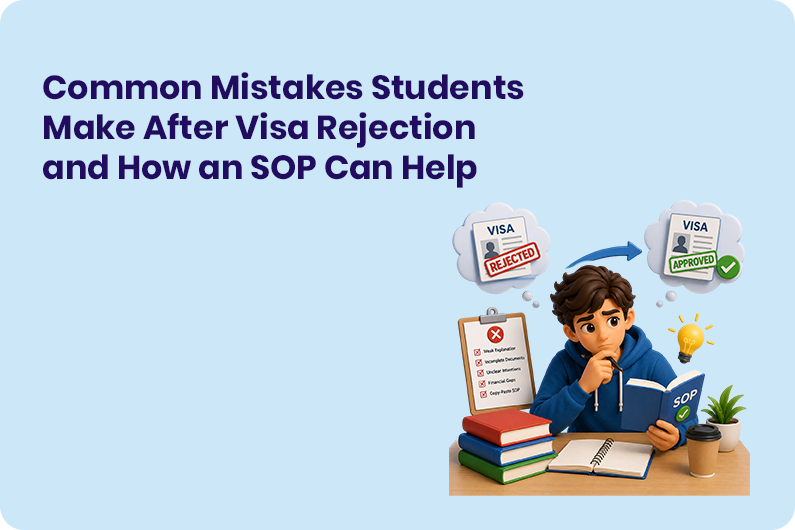
A student visa rejection can make applicants feel stressed, confused, and unsure about their next step. Many students immediately think about reapplying because they do not want to lose their admission, intake, or study abroad plan. This reaction is natural, but reapplying too quickly without understanding the refusal can create the same problem again. Most Refusal Mistakes happen because students treat the next application as a fresh attempt instead of a corrected attempt. They may use the same SOP, submit the same documents, change the course suddenly, or write emotional explanations without solving the real concern. As a result, the new application may look almost the same as the previous one. In this article, we will explain the common mistakes students make after visa rejection and how a revised SOP can help present a clearer reapplication case. We will discuss refusal analysis, course logic, financial explanation, document clarity, academic background, and future plans. Students who need support from SOP Writing Services in India should remember that the aim is not to create a dramatic story, but to build a truthful and better-connected explanation.
Why Students Must Not Rush After a Visa Rejection
A visa rejection should not be followed by panic. Many students feel that applying again quickly will save time, but speed does not make a weak application stronger. If the same concerns remain unanswered, the next application may face the same difficulty. The better approach is to pause and understand the refusal. The student should read the refusal letter carefully and review the full application. The problem may not always be in the SOP alone. It can be in the course choice, financial documents, academic timeline, sponsor explanation, study gap, or future plan. A revised SOP can help only when it is written after this review. If the student simply changes a few words and submits the same explanation again, the SOP will not solve the real issue. The new statement should show what was unclear earlier and how the reapplication gives a better explanation now.
How a Revised SOP Can Help After Student Visa Refusal
A revised SOP helps by connecting the student’s documents and intentions into one clear story. Visa officers usually review admission documents, financial papers, academic records, sponsor details, and background information. These documents may show facts, but they do not always explain why the student has made certain choices. This is where a revised SOP becomes useful. It can explain why the student chose a particular course, how it connects with previous studies or work, how the education will be funded, and what the student plans to do after completing the program. After a refusal, this explanation becomes more important because the earlier file was not convincing enough. A good SOP does not guarantee visa approval. It only improves clarity and presentation. It helps the application look more organised, consistent, and easier to understand. When written properly, it can correct weak explanations and reduce confusion in the reapplication file.
Common Mistakes Students Make After Visa Rejection
Reapplying Too Quickly Without Understanding the Refusal
One of the biggest mistakes students make is reapplying immediately after rejection. They may feel that a new application will give them another chance, but without refusal analysis, the new file may repeat the same weakness. The student should first understand what the refusal reason actually means. If the reason is broad, the full application should be reviewed carefully. The old SOP, financial documents, academic records, course selection, and future goals should be checked together.
A stronger reapplication begins with understanding. Once the weak areas are clear, the new SOP can explain the case with better structure and stronger support.
Ignoring the Refusal Reasons
Ignoring the refusal reason is one of the most serious Common Refusal SOP Mistakes. Some students write a completely new SOP but do not answer the actual concern raised in the rejection. This makes the reapplication look incomplete. If the concern was related to finances, the new SOP should explain the source and stability of funds. If the issue was course relevance, the SOP should explain why the selected course is suitable. If the concern was future plans, the student should present a more practical career direction. The SOP should not avoid difficult points. It should handle them respectfully and clearly. A strong reapplication SOP shows that the student has understood the concern and has corrected the explanation with better facts and documents.
Using the Same SOP Again
Many students use the same SOP again because they think the previous one was well-written. However, a well-written SOP is not always a strong SOP. If it failed to answer the visa officer’s concern, using it again with minor edits may not help. A new SOP for Student Visa After Refusal should be written from the reapplication point of view. It should not repeat the same story in polished language. It should explain what was missing earlier and how the current application is clearer. The student should rebuild the SOP around refusal points, course logic, financial readiness, and future plans. This makes the document more useful than a general statement.
Changing the Course or Country Without Proper Logic
After refusal, some students quickly change their course, college, university, or country. This may be the right decision in some cases, but it can create more doubts if the reason is not explained properly. A sudden change should have academic or career logic. The student should explain why the new course is more suitable, how it matches the profile, and how it supports future goals. If the previous course was weak, the SOP should explain why the new choice is better. Without this explanation, the change may look random. A revised SOP should help the reader understand that the student has made a thoughtful decision, not a desperate one.
Submitting Weak or Unclear Financial Documents
Financial issues are common in many student visa refusals. Sometimes the funds are available, but the explanation is unclear. The sponsor may not be explained properly, the income source may look weak, or the documents may not match the SOP. The SOP should not replace financial documents, but it can explain them. It can mention who is sponsoring the education, what the sponsor does, how the funds are arranged, and how tuition fees and living expenses will be managed. The explanation should remain simple. Detailed figures should be supported by documents. Experienced SOP Writers in India often focus on making the financial story easier to understand because unclear funding can weaken the overall application.
Giving a Weak Academic or Career Explanation
A student visa application should show why the selected course makes sense. If the student cannot explain the academic path, the study plan may look weak. This becomes a bigger problem after refusal. The SOP should connect previous education, work experience, skill gaps, selected course, and future goals. If the student is changing fields, the reason should be explained clearly. If there is a study gap, the SOP should explain what happened during that time and how the student remained focused on future plans. Career goals should be practical. Instead of writing “I want a successful career,” the student should explain the type of role, industry, or professional direction they want to follow. This makes the study purpose stronger.
Adding Emotional Appeals Instead of Facts
Many students write emotional content after refusal. They mention stress, family pressure, broken dreams, or disappointment. These feelings may be real, but they do not answer the refusal reason. A visa SOP should stay calm and factual. It should show preparation, not desperation. Emotional appeals can make the application look weak if they replace proper explanation. The better approach is to write with honesty and control. The student can briefly acknowledge the refusal, but the main focus should remain on corrections, documents, and clear reasoning.
Not Matching the SOP with Documents
A strong SOP should match the complete application file. If the SOP mentions one sponsor but the documents show another, it can create confusion. If academic dates, employment records, course details, or financial figures do not match, the reapplication may look careless. The SOP should guide the reader through the documents. It should not introduce new claims that are not supported by proof. Before submission, students should check names, dates, course information, sponsor details, financial documents, academic records, and work experience. Consistency builds clarity. A file that tells the same story through the SOP and documents is easier to understand.
How to Prepare a Stronger SOP After Visa Rejection
A stronger SOP should begin with refusal analysis. The student should first understand what went wrong and then write the new SOP around correction. The opening should briefly introduce the refusal context and explain that the new application has been prepared with clearer details. After this, the SOP should move into the main areas of concern. It should explain study purpose, course selection, academic background, financial readiness, home ties where relevant, and future plans. Each section should answer a real question in the application. The writing should remain simple and personal. Copied content, heavy vocabulary, and generic lines do not make the SOP stronger. A good reapplication SOP should sound clear, truthful, and connected with documents.
Final Checks Before Reapplying After Visa Refusal
Before reapplying, students should review the complete file, not only the SOP. The refusal reason, course logic, academic timeline, financial proof, sponsor details, future plan, and documents should all be checked together. The SOP should clearly explain what has changed or improved in the new application. If the course has changed, the reason should be clear. If new financial documents have been added, the SOP should explain their relevance. If the earlier career plan was weak, the new one should be more practical. A strong reapplication is not about applying faster. It is about applying with better clarity, stronger documents, and a corrected explanation. This approach makes the next application more organised and easier to understand.
Conclusion
Most visa refusal mistakes happen because students react quickly instead of reviewing the rejection properly. They may ignore the refusal reason, use the same SOP, submit weak documents, change the course without logic, or write emotional content. These mistakes do not strengthen the next application. A revised SOP can help when it directly addresses the refusal concerns and presents the case with better reasoning. It should connect the student’s background, course choice, finances, documents, and future plans in a clear and truthful way. For students who need structured support after refusal, Contentholic offers a professional Visa SOP Writing Service for reapplication cases. The aim is to help students present their genuine case with better clarity, stronger flow, and proper document alignment.